
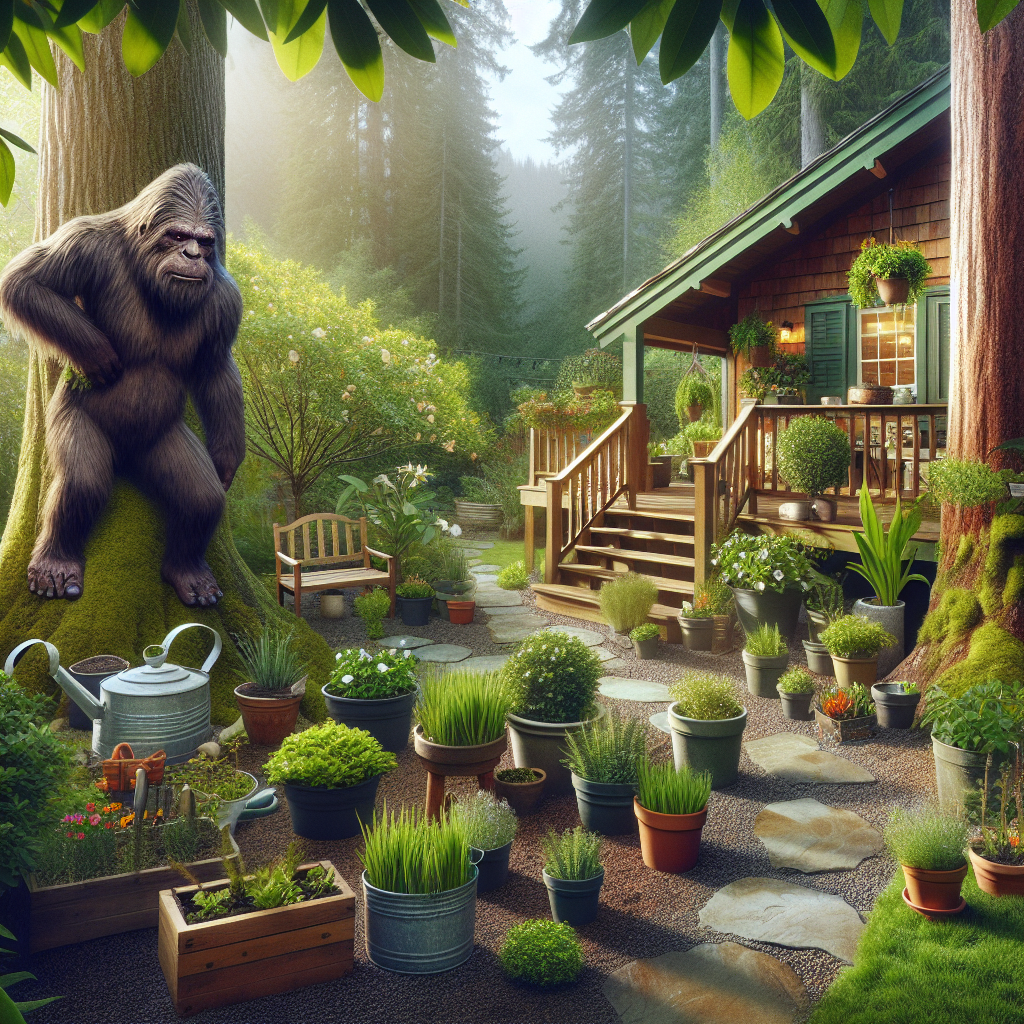
Spring Container Gardening: The Soil Recipe & Drainage Strategy That Stops Root Rot Before It Starts
I've been watching folks kill plants in containers for thirty years, and it's almost never the plant's fault. They buy a ceramic pot because it looks nice, dump in whatever's on sale at the garden center, and then wonder why everything's rotting by June. The problem isn't the plant. It's that nobody taught them the actual system.
Listen, I know I'm a large hairy cryptid who probably shouldn't care this much about patio vegetable containers, but here we are. I've watched too many neighbors spend real money on seedlings and then lose them to the same three mistakes. So let's fix that.
The Container Size Problem (And Why Bigger Isn't Always Better)
Most people grab whatever pot they like the look of and hope for the best. That's not a strategy. Container size directly affects how often you water, how fast roots develop, and whether you're fighting root rot or actually growing something.
Now here's the thing: soil in a too-large container stays wet longer. That wet environment is basically an invitation to fungus and root disease. A too-small container dries out in two days and your plant starts gasping. You need the middle ground.
Here's what actually works for spring planting containers:
- Herbs (basil, parsley, cilantro): 6 to 8 inches wide, 6 inches deep minimum. A single herb needs around 6 to 8 square inches of surface area.
- Salad greens and lettuce: 10 to 12 inches wide, 8 inches deep. Shallow roots, but they need room to spread sideways.
- Tomatoes and peppers: 18 to 20 inches wide, 16 inches deep at minimum. Go bigger here—these plants drink water and demand space. A 5-gallon nursery pot (which measures about 12 inches across) is your absolute minimum, and honestly, I recommend 20 inches.
- Trailing plants (calibrachoa, petunias): 12 inches wide, 10 inches deep. They spread out, not down.
- Shrubs and perennials in containers for the season: 20 to 24 inches wide, 18 to 20 inches deep.
A few summers back I watched a neighbor spend three weekends hand-watering a tomato container because the pot was too shallow and the soil dried out by 10 a.m. every day. He switched to a proper 20-inch pot that same year and suddenly he wasn't out there with the hose every morning. The plant had room to actually develop roots that held moisture.
Container Drainage Holes: Non-Negotiable
I'm going to say this plainly because it matters: if your pot doesn't have drainage holes, don't use it for living plants. Not as your main container, anyway.
Folks, you can have the perfect soil and perfect watering technique, but without drainage your roots will sit in stagnant water. The oxygen can't get to the roots, and within a week you've got root rot that spreads faster than you can fix it. There's no coming back from that.
You need at least one hole that's roughly the diameter of a pencil (about ¼ inch). If your container has a wide base, aim for three or four holes. Space them out instead of clustering them in one spot. And make sure the holes actually go all the way through—some people think a drainage "pattern" in the bottom counts. It doesn't.
If you fall in love with a pot that doesn't have holes, use it as a decorative outer pot. Place a properly drilled nursery pot inside it. Problem solved, and your pot stays dry and pretty.
The Potting Soil Recipe That Actually Works
Most garden centers will point you toward a generic "potting soil" from a big brand—and look, it works fine for a while, but you're mostly paying for the bag and the name. You can make something better, cheaper, and more reliable in about five minutes.
The standard recipe that I've seen work across three decades and about a thousand containers is this:
- 40% high-quality potting soil base (something like Miracle-Gro Performance Organics or Espoma Organic—brands that actually have structure and don't compress into concrete by July)
- 30% peat moss or coconut coir (peat holds moisture; coir is the sustainable option and performs just as well)
- 20% perlite or vermiculite (this is your aeration—it keeps the whole mix from getting dense and waterlogged)
- 10% compost (finished, dark compost—this feeds the plant slowly and improves soil structure)
Mix these by volume, not weight. A 5-gallon bucket is your measuring cup: 2 buckets of base, then 1.5 buckets of peat/coir, then 1 bucket of perlite, then 0.5 buckets of compost. Blend it with your hands or a shovel until it's even. That's your spring planting containers mix right there.
Why this ratio? The base potting soil gives you structure and some nutrients. The peat or coir holds water where roots can actually access it (not just sitting at the bottom). The perlite punches air pockets through the whole mix so nothing gets compacted. The compost provides slow-release nutrients so you're not burning seedlings with synthetic fertilizer right out of the gate.
You'll spend maybe $15 for materials to make enough mix for six large containers. A bag of pre-made premium potting soil runs $12 to $16 for one container worth. Do the math.
Arrangement and Spacing: Setting Yourself Up to Actually Win
Where you place your containers matters as much as what's in them. I'll tell you what happens when someone just scatters pots around—some get six hours of sun and thrive, others are in shade and get watered the same amount, and suddenly half your containers are failing for reasons that look mysterious but aren't.
Start by knowing what each plant actually needs. Tomatoes, peppers, and herbs want six to eight hours of direct sun minimum. Lettuce and leafy greens can manage with four to six hours and actually prefer afternoon shade when it gets hot. Trailing flowers are flexible but perform better with more light. Group your containers by their light requirements, not by how nice they look together.
Space your containers so air can move between them. Plants in a tight cluster stay damp longer and mildew moves through like gossip in a small town. Leave maybe a hand's width between pots. This also makes watering easier because you can actually see the soil surface and feel when it's dry.
If you're setting up patio vegetable containers, keep them relatively close to where you're going to harvest from them. A tomato container that's ten steps from your kitchen gets picked more often than one that's thirty feet away on the corner of the patio. You'll use what's convenient.
The First Watering and What to Actually Check
After you fill your containers with that soil mix and plant your seedlings, don't water immediately. Wait until the next day. Your soil already has some moisture in the mix. If you water right away, you're just asking for problems.
When you do water, water until it comes out the drainage holes—slowly, so the water actually soaks in instead of running straight through. Stick your finger two inches down into the soil. If it feels damp, you're good. If it's dry, water again. That's your check for the whole season: two-finger test in the morning.
The soil drying out slightly between waterings is actually good. It lets roots breathe and tells you the system is working. Constantly wet soil is the path to root rot, and root rot is the end of the conversation.
This setup—proper container size, drainage holes you can count on, soil that actually drains and holds the right amount of moisture, and containers arranged so air moves through them—will get you through spring and into summer without constant replanting and replacement. You're not fixing failures anymore. You're just watering and watching things grow.
That's how it should be from the start.