
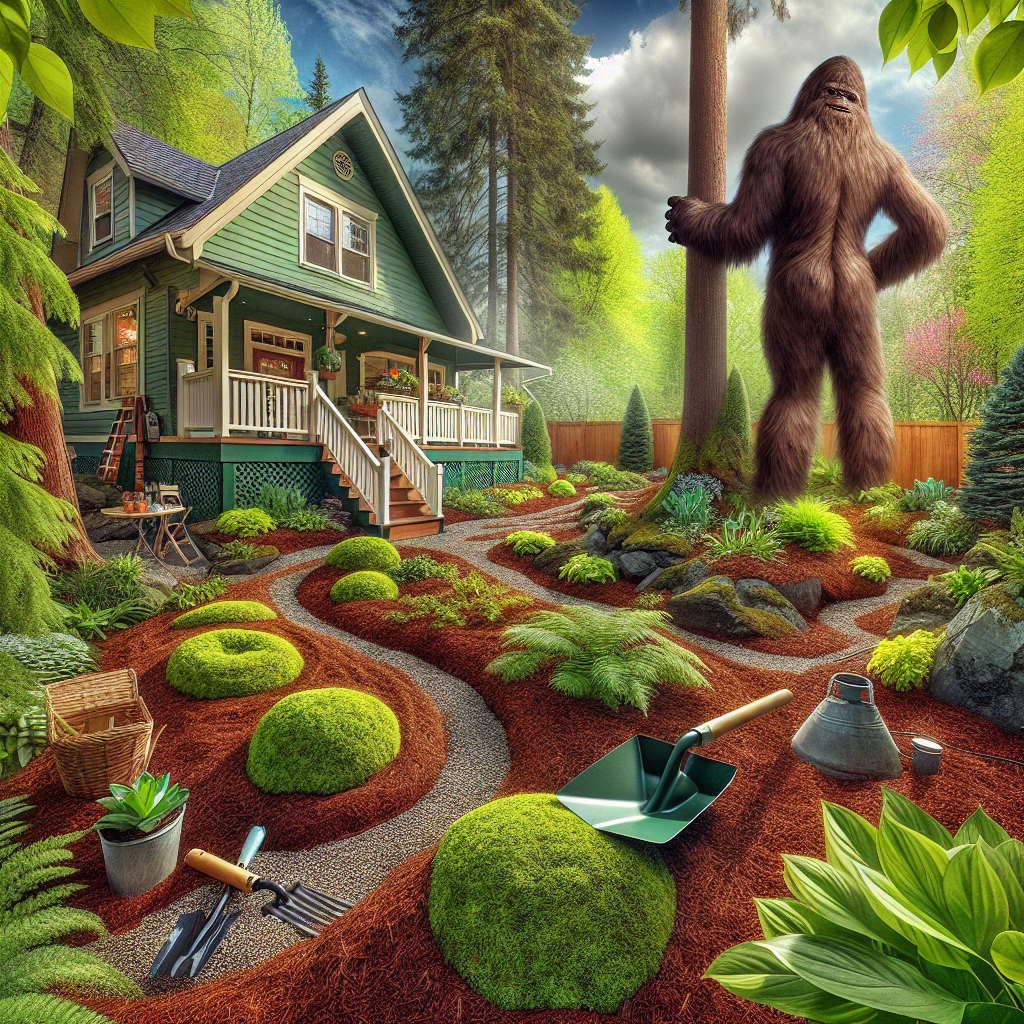
You're Probably Wasting Money on Mulch Right Now
I'll tell you what—I've been watching people mulch their beds for thirty years from the tree line, and most of them are doing it backward. They buy bags like they're going out of style, spread them too thin in some spots and pile them like snow drifts against tree trunks in others, then wonder why they're buying the same stuff again next season. The weeds come back. The moisture evaporates. And they've spent three times what they should have.
Spring mulch application isn't complicated. But it does require knowing a few specific things that garden centers don't always volunteer—mostly because if you got it right, you'd need less product next year. So here's the real deal on mulch depth, types, and placement. Write this down or bookmark it, because your May self will thank you when you're not out there pulling crabgrass at sunrise.
The Depth Question: Why Most People Get This Wrong
Listen, the biggest mistake is applying mulch too shallow. A one-inch layer looks fine when you first spread it. It's clean. It's neat. It's also useless. That much mulch will decompose or settle in four weeks, and you'll start seeing soil again by early summer.
Here's what actually works:
- Around shrubs and perennial beds: 2.5 to 3 inches. This is your sweet spot for weed suppression and moisture retention without suffocating the soil. Measure it. Don't eyeball it.
- Under trees: 2 to 3 inches, but—and this matters—keep it 4 to 6 inches away from the trunk. More on that in a minute.
- Around newly planted perennials: 2 inches. You don't want to bury emerging shoots, and new plants need better air circulation than established beds.
- Vegetable garden beds: 2 to 2.5 inches. Heavier mulch can trap moisture and invite slugs and rot.
A few summers back I watched a neighbor spend three weekends applying mulch in light coats—half an inch here, three-quarters there—then calling in a landscaper by July because the weeds had taken over. The landscaper charged him $400 to rip it all out and do it right. He could've saved that money and a weekend of frustration with a mulch depth chart and a tape measure.
Best Mulch Types for Spring—And What You Actually Need
Now here's the thing: not all mulch is created equal, and where you live matters a lot. Back in my neck of the woods, the Pacific Northwest is wet enough that you want mulch that doesn't pack down into a waterproof mat. Choose the wrong type and you're asking for root rot.
The main players:
Shredded Hardwood Mulch
This is the standard. It breaks down slower than softwood, holds moisture well, and looks good. It's a three-season mulch in most climates. Cost is reasonable—usually $35 to $50 per cubic yard bulk, or $3 to $5 per bag. For a 10-by-10 bed at 3-inch depth, you're looking at roughly 10 cubic feet, or about three bags. Do the math before you buy.
Cedar or Redwood Mulch
Most garden centers will point you toward this—and look, it works fine, but you're mostly paying for the name and the smell. Yes, cedar has natural oils that insects dislike. But at a 40 to 60 percent premium over hardwood, you're spending $60 to $80 per cubic yard for a benefit that's honestly overstated. Use it around patio edges where aesthetics matter. Use hardwood in your planting beds.
Compost-Based Mulch
This breaks down fast—too fast for weed suppression as a standalone layer. Use it as a 1-inch top dressing over your weed suppression mulch if you want, but not alone.
Wood Chips (Arborist Grade)
Free or cheap if you find a local tree service. The pieces vary in size, which means settling and compaction are uneven. Good for pathways and around utility areas. Not ideal for weed suppression mulch in beds.
For best mulch types for spring, I lean toward shredded hardwood in almost every situation. It's reliable, affordable, and it does what you need it to do without drama.
Mulch Around Trees: The Part Everyone Gets Wrong
This is where I see the most damage. People create what I call the "mulch volcano"—a cone of wood chips piled six, eight, sometimes ten inches high right against the tree trunk. They think it's protecting the tree. It's actually killing it slowly.
Here's what happens: bark stays wet. Fungal diseases move in. Rodents nest in the warm, moist mulch and girdle the bark from underneath. The tree declines over two or three years, and nobody connects it back to the mulch.
The correct approach for mulch around trees is this: Create a donut, not a volcano. Lay down your weed suppression mulch starting 4 to 6 inches away from the trunk—let the tree flare breathe—and extend it out to about the drip line (the outer edge of the branch canopy). Your layer should be 2 to 3 inches thick at most. That's it. That's the whole system.
For a mature oak or maple, aim for a mulch circle roughly 6 to 8 feet in diameter. For smaller ornamentals, 4 feet works. Keep the trunk clear. Always.
Placement and Weed Suppression Strategy
Listen, weed suppression mulch works by blocking light. But mulch alone isn't enough if you've got an established weed problem. Here's the layered approach that actually stops weeds:
- Step 1: Remove existing weeds by hand or with a hoe. Don't leave roots.
- Step 2: Lay down cardboard or newspaper—3 to 4 sheets overlapped—directly on bare soil. This is your first weed barrier.
- Step 3: Apply your shredded hardwood mulch over the cardboard at 2.5 to 3 inches depth.
- Step 4: Water it in. You want moisture in the soil, not just on the surface.
Folks who skip the cardboard step are fighting an uphill battle. Mulch alone will suppress weeds, but not completely. The cardboard rots in one season and becomes part of your soil amendment. It costs almost nothing and it works.
Around established trees and shrubs, mulch placement matters too. Pull it back from the base (that 4 to 6 inch gap I mentioned). Keep it away from fence lines where it can trap moisture and rot wood. Extend it under tree canopies to catch rainfall and reduce soil evaporation. Think about water flow—where does rain run off? Mulch intercepts that and soaks it in.
Timing and Seasonal Considerations
March through early May is the right window for spring mulch application in the Pacific Northwest. Soil is warming up. You'll get a full season of weed suppression before summer heat sets in. If you wait until June, you've lost your advantage—summer weeds are already established.
In drier climates, apply mulch right before your spring rains. In wetter climates like ours, you can apply it earlier because decomposition and settling happen at a natural pace.
One other thing: if you mulched last fall, don't double-mulch in spring. Your last layer is still doing its job. Top-dress lightly—half an inch—if coverage looks thin. That's it.
The Math: How Much Mulch You Actually Need
Calculate volume before you buy. Measure bed length and width in feet. Multiply length × width × depth (in feet, so 3 inches = 0.25 feet). That gives you cubic feet. Divide by 27 to get cubic yards. Most bulk mulch suppliers price by the cubic yard.
Example: A 20-foot bed × 4 feet wide × 0.25 feet deep = 20 cubic feet, which is roughly 0.75 cubic yards. At $40 per yard, you're spending about $30. At 3 to 4 bags per cubic yard, that's 2 to 3 bags if you're buying bagged mulch.
Buy slightly more than you calculate. Mulch settles. You'll be grateful for the extra in six weeks.
One Last Thing
Mulch isn't a set-it-and-forget-it system. By late summer, you might need to rake it smooth and redistribute settled areas. In fall, add a light top-dressing if spring mulch has decomposed significantly. But if you get the initial depth, type, and placement right this March, you'll spend less time and money on mulch maintenance than you are right now. And that's the whole point—not more work, less. Better results. Fewer weeds pulling at you come July.