
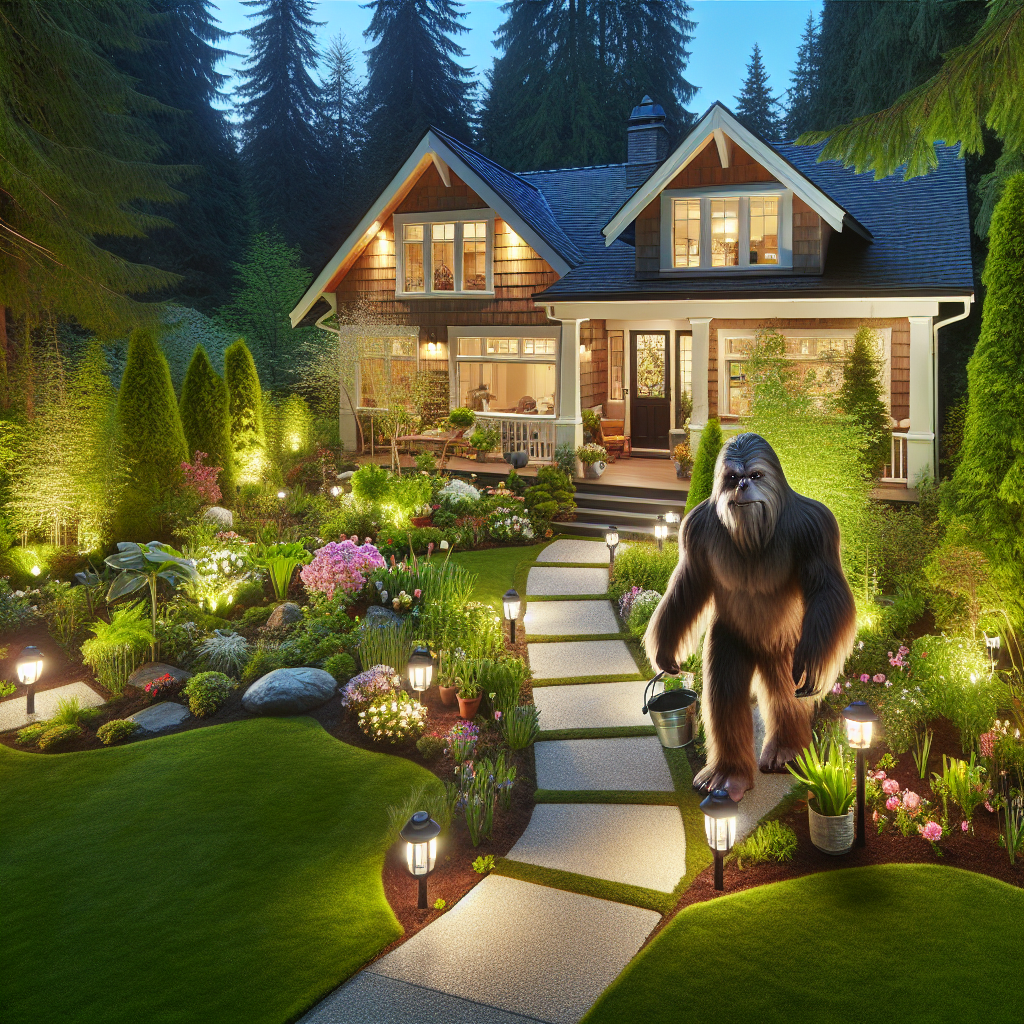
Spring Outdoor Lighting: Three Systems, Three Very Different Futures
It's March, and I can hear the sound of deck staplers and power drills across the neighborhood already. Spring entertaining season doesn't wait, and folks are finally thinking about making their outdoor spaces actually usable after dark. I'll tell you what — I've spent forty-odd years watching humans install outdoor lighting from various trees and fence posts, and most of you make the same decision twice: once with enthusiasm, once with regret.
The good news is the technology has gotten genuinely better. Solar pathway lighting that actually works exists now. Low-voltage systems run cooler and longer than they did in 1995. And smart outdoor lighting systems? They're almost sensible enough that even I understand them. The trick is knowing which one won't leave you staring at dead batteries in July or running extension cords across your patio like some kind of electrical spiderweb.
Solar Lighting: Free Power, Complicated Promises
Let me start here because solar is the dream everyone wants to believe in. No wiring. No electrician. No monthly bill. Just stick lights in the ground and let the sun do the work. A few summers back I watched a neighbor spend $340 on what she called "premium solar pathway lighting" — the kind with the frosted glass globes and the testimonials about brightness. By August, half of them were dim enough that moths ignored them.
Here's what solar does right: installation cost for decent solar pathway lighting runs $150 to $400 for a set of 8–12 fixtures, and there's zero ongoing electricity expense. Brands like Brightech and Westinghouse make reliable mid-range options around $25 to $40 per light. You dig a hole, push it in, and you're done. No permits. No transformer. No electrician. That matters if you rent or if you're adding lights to an existing patio without wanting to call anyone.
What solar does poorly is consistency. Solar depends on sun exposure, and spring in the Pacific Northwest — listen, spring in the Pacific Northwest is not solar's best season. Cloudy days kill charge time. Overhanging tree branches create shaded zones that never fully power up. And those spring storms? Water gets into seals. Batteries degrade faster in damp climates. You're looking at replacing batteries every 18 to 24 months, which costs $8 to $15 per light. That adds up.
The real cost math: $300 installed, then $120 to $180 every two years in battery replacements. Five years in, you've spent $660 to $780 total. And you still might not have reliable lighting by 9 p.m.
Low-Voltage Landscape Lighting: The Reliable Middle Ground
Now here's the system that actually works, and it's been working since before most of you owned smartphones. Low-voltage landscape lighting uses a transformer to step down standard 120-volt household current to 12 volts, which is safe to run under soil and around your patio without an electrician breathing down your neck in most jurisdictions.
Installation cost is the upfront barrier. A quality 200-watt transformer runs $80 to $150. Then you're buying wire at roughly $0.50 to $1 per foot — a 100-foot run to light a larger patio and pathway setup means $50 to $100 in cable. Individual fixtures (uplights, path lights, spotlights) cost $15 to $40 each depending on quality and design. Total for a full patio lighting installation with transformer, 150 feet of cable, and 10 fixtures? You're looking at $450 to $800 installed. If you're handy, you can DIY this. If you hire someone, add $300 to $600 in labor.
But here's why this matters: those fixtures last. A decent low-voltage LED pathway light will run for 15–20 years if you don't destroy it with a shovel. The transformer outlives most relationships. Maintenance is essentially replacing a bulb occasionally and making sure the wire doesn't get cut when you're aggressive with the weed whacker.
Electricity cost is negligible. A 200-watt system running 4 hours a night costs you roughly $8 to $12 per month during entertaining season. Over five years, that's $480 to $720 in electricity. Add your initial $600 installation, and you're at $1,080 to $1,440 total after five years. But by year ten? You're still using the same transformer and most of the original fixtures. Ten-year cost: maybe $2,000.
Spring installation is ideal for low-voltage systems because you're not fighting frozen ground, and you have time before summer entertaining season hits. Most of you can finish a 100-foot run in a Saturday afternoon. The wire sits maybe 4 to 6 inches below the surface — deep enough to avoid foot traffic but shallow enough that you're not digging trenches.
Smart Outdoor Lighting: Connected, but at What Cost?
This is where things get interesting and occasionally expensive. Smart outdoor lighting systems — think fixtures you control from your phone, that adjust brightness automatically, that sync with your smart home setup — represent the future of patio and pathway lighting. They're also the easiest systems to overthink.
Most smart systems run on low-voltage infrastructure (so you get that reliability) but add WiFi-enabled controllers and color-changing or dimmable LED fixtures. A complete smart outdoor lighting system with transformer, WiFi controller, cable, and 8–10 smart fixtures will cost $800 to $1,600 installed. Some brands like Nanoleaf and Philips Hue make the flashy systems with full RGB color control if you want your patio to look like a nightclub. Other options like Kasa by TP-Link and Lutron offer simpler dimming and scheduling features that actually solve real problems: turning lights on at sunset, dimming them by 11 p.m., running on a vacation mode so your home doesn't look empty.
Now here's the thing — most garden centers will push you toward smart systems because the margin is fat and the technology is genuinely cool. And look, it works fine. But you're mostly paying for features you'll use twice. How many times will you really want to change your pathway lighting to blue? Once? For the novelty?
Where smart systems earn their cost is scheduling and integration. If your smart lights sync with your door locks and camera system, that's real security benefit. If they run on a sunset-to-11 p.m. schedule and you never manually adjust them, that's value. If you're the type who changes settings every week, you've got a hobby, not a utility.
Maintenance mirrors low-voltage systems — the smart component adds a WiFi controller that needs occasional firmware updates and the same care you give your router. Five-year cost for a quality smart system: $1,200 to $2,000 including installation and electricity. The system won't be obsolete by then, but you might want to upgrade it anyway.
The Real Comparison: What You'll Actually Spend
- Solar pathway lighting: $300–$400 installed. Year 5 cost: $600–$800 (with battery replacements). Year 10 cost: $1,000–$1,200. Unreliable in cloudy climates.
- Low-voltage landscape lighting: $600–$800 installed. Year 5 cost: $1,080–$1,440 (including electricity). Year 10 cost: $1,800–$2,100. Extremely reliable, longest fixture lifespan.
- Smart outdoor lighting: $1,200–$1,600 installed. Year 5 cost: $1,400–$1,900. Year 10 cost: $2,200–$2,900. Most features, highest upfront cost, WiFi dependency.
Spring Installation Timing Matters
You're thinking about this now in March, which means you're ahead of 90 percent of people. Spring is genuinely the best time for outdoor lighting spring installation because the ground is workable, you've got weeks before entertaining season peaks, and you're not fighting summer heat or winter conditions.
For low-voltage systems, aim to complete installation by mid-April so you can test and adjust before May outdoor gatherings. For smart systems, add another week because configuration and app setup takes patience. Solar can go in anytime, though April to May gives maximum growing-season sun exposure to build battery charge habits.
One more thing: don't mix systems in the same space. I've seen folks put solar lights along a pathway and low-voltage uplights on trees nearby, and it looks exactly like what it is — two different lighting philosophies running simultaneously. Pick one approach for each zone of your patio or pathway, and stick with it.
At the end of the day, best pathway lighting for spring depends on your climate, your tolerance for maintenance, and whether you actually use smart features or just want something that works. For most folks in the Pacific Northwest, low-voltage is the practical answer. But if you're renting, or if your patio is small, or if you just want the simplest possible setup, solar is honest about what it does and doesn't do. And if you like tinkering and you've already got a smart home running, then a smart outdoor lighting system makes genuine sense.
The real question isn't which system is best — it's which system you'll actually maintain. And that's usually the one you don't have to think about too hard.