
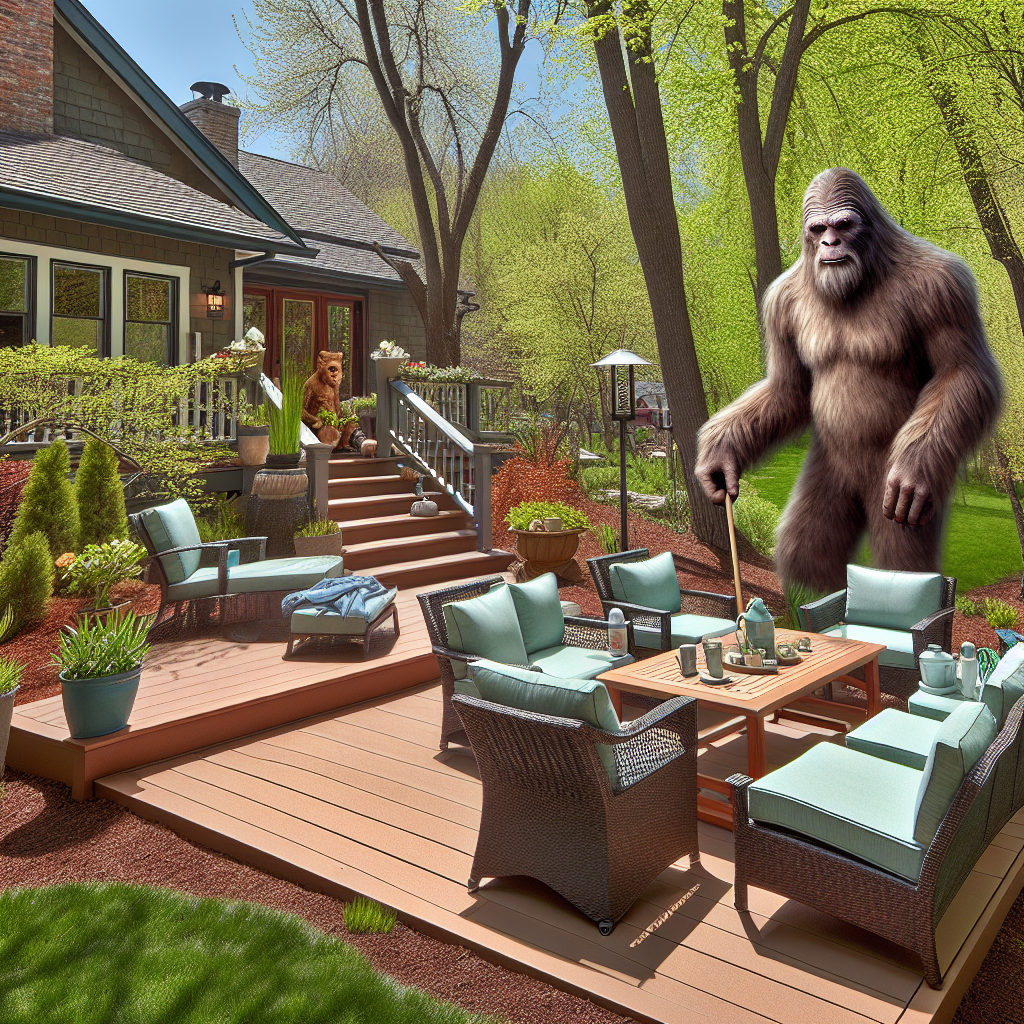
Spring Patio Furniture Setup: Build Your Outdoor Living Space Right
Most folks wait until May to think about their patio, which means they're scrambling and buying whatever's left on the display floor at the garden center. Don't do that. March is your window—the one month when you've got time to actually choose what goes out there instead of just grabbing something because it's been marked down twice.
I've spent a lot of years watching people set up their outdoor spaces from behind the Douglas firs, and I can tell you right now: the ones who think through their patio furniture spring setup before the weather gets warm are the ones eating dinner outside in July while their neighbors are still fighting with wobbly chairs and faded cushions.
What Actually Survives Spring Storms
Listen, spring in the Pacific Northwest isn't gentle. We get wind gusts that would make most people's patio umbrellas airborne, then sudden sun that bleaches everything, then more rain. Your furniture's got to handle all three in the same week. That's why material choice matters more than the catalog photos suggest.
Teak is expensive—and I mean expensive—but it's expensive for a reason. This wood's got natural oils that fight rot and UV damage without needing sealant every year. A good teak chair will outlast the deck it sits on. Back in my neck of the woods, I've watched one family's teak set survive two decades of coastal weather.
Most garden centers will point you toward aluminum frames with all-weather cushions, and look—it works fine. Really fine, actually. But you're often paying $400 for something that does the job of a $250 option with a better brand name stamped on it. Check the frame thickness. Anything under 1.5 millimeters is thin. Go thicker, and you're spending money on durability instead of marketing.
Wrought iron and cast aluminum are cousins—similar look, different performance. Cast aluminum won't rust in the salt-air areas near the coast. Wrought iron will, unless you keep up with touch-ups. For weather-resistant outdoor furniture, cast aluminum wins if you're anywhere humid or within 50 miles of salt water. For dry climates, wrought iron's the showier choice, but you're signing up for maintenance.
- Teak: No sealant needed, naturally weather-resistant, costs $800–$2,500 per piece. Worth it if you're keeping furniture 15+ years.
- Cast aluminum: Won't rust, lightweight, $300–$800 per piece. Cushions fade faster than the frame.
- Wrought iron: Heavy (needs two people), rust-prone without care, $250–$600 per piece. Beautiful if maintained.
- Recycled plastic lumber (Polywood and equivalents): Virtually indestructible, $400–$900 per piece, looks modern or rustic depending on style. Never needs stain.
- Resin wicker: Looks like natural wicker, won't unravel, $350–$1,200 per piece. Cushions matter; buy outdoor-grade fabrics like Sunbrella.
The Layout Thing Nobody Talks About
Here's what I notice: people buy furniture first, then try to arrange it. Then they run out of walking space and the whole area feels crowded even though it's only got four chairs. Do it backwards. Map out your patio layout design before you buy anything.
Measure your space in feet—actual feet, with a tape measure, not paces. Write it down. Sketch a rough rectangle or shape. Now mark where the sun hits at 10 a.m., 2 p.m., and 5 p.m. in spring. That's different than summer, so this matters now.
Now think about zones. Most people need three: a dining area, a lounging area, and a transition space. A small patio might combine lounging and transition. A bigger one might need a corner for grilling separate from the dining table. Y'all don't need to cram a 12-piece sectional next to a six-seat dining table. That's how you end up with $4,000 of furniture and nowhere to actually sit comfortably.
A 12-by-14-foot patio can handle a dining table (6 feet long) plus four lounge chairs in conversation arrangement, with a small side table for drinks. Not all at once in the same visual space—that's the key. A patio layout design that works has breathing room.
The Spring Refresh That Actually Lasts
If you've got existing furniture, March is when you assess it. Pull it out. Look at the underside of the cushions—if they're holding water or if the fabric's grown mold, replace them before you use them. Sunbrella fabric costs more upfront but lasts four to five seasons without fading. Cheaper outdoor fabric fades in one year and then starts to split. Do the math.
Check any wooden frames for soft spots. Press your thumb into corners and where joints meet. If it leaves an indent, the wood's compromised. A few soft spots can be sanded and sealed. Widespread softness means replacement time.
Outdoor furniture materials comparison isn't just about cost—it's about what you'll actually use and maintain. Someone who grills out four nights a week and has kids running across the patio needs durability over aesthetics. Someone who uses their patio twice a month and wants it to look showroom-ready might prioritize finish.
The Arrangement That Invites People Outside
A few summers back I watched a neighbor spend three weekends arranging and rearranging their new patio furniture. First attempt: everything in a grid facing inward like a conference room. Second: everything along the edges so the center was empty and echoing. Third time they got it—a slight angle, clusters of seating that could function together or separately, with an actual focal point (their fire table). That's when their friends started actually staying outside.
Angle chairs slightly toward each other instead of facing dead-on. People talk better that way. Put a small side table within reach of every seating spot—within arm's reach, not three feet away. A 15-by-12-inch table works fine. Don't use anything smaller or you're just creating clutter.
Now here's the thing: shade. If your patio gets hard sun from 1 to 4 p.m., you need a solution. An umbrella (get one over 9 feet in diameter, 7 feet is a joke), a pergola with fabric, or even a good sail shade. Cushions fade in direct sun. People don't sit in direct sun in spring if there's an alternative. Build the alternative into your layout before you buy the furniture.
What You're Actually Buying This Spring
Focus on pieces that earn their spot. A dining table you'll use. Four to six chairs (people don't all sit at once anyway). One or two loungers if you have space. One small side table. That's your bones. Everything else is negotiable.
Folks always want the furniture set that comes in the box—the matching everything, the coordinated look. Most of those sets come with weak cushions that'll be replaced in two years anyway, and frames that are okay but not great. You'll spend less money and get better quality buying one teak dining set and mismatched loungers from a specialty outdoor store than buying a five-piece set from a big box.
Cushions: buy Sunbrella or equivalent outdoor fabric. Yes, it costs more. No, you won't regret it. Regular outdoor-grade cushions fade and crack in one season. Sunbrella lasts. Store them in a dry spot over winter, or get storage boxes for your patio—those cost $150 to $300 and keep everything in better condition than leaving it out.
Your spring outdoor living refresh isn't about getting everything new. It's about being intentional with what goes where, choosing materials that'll still look decent in August, and leaving yourself space to actually move around and breathe. That's the difference between a patio and a furniture warehouse.
Get out there and measure your space this weekend. Sketch it out. Then shop knowing what you're solving for instead of just buying what looks good in the catalog. Your future self—the one eating dinner out there in June—will thank you.