
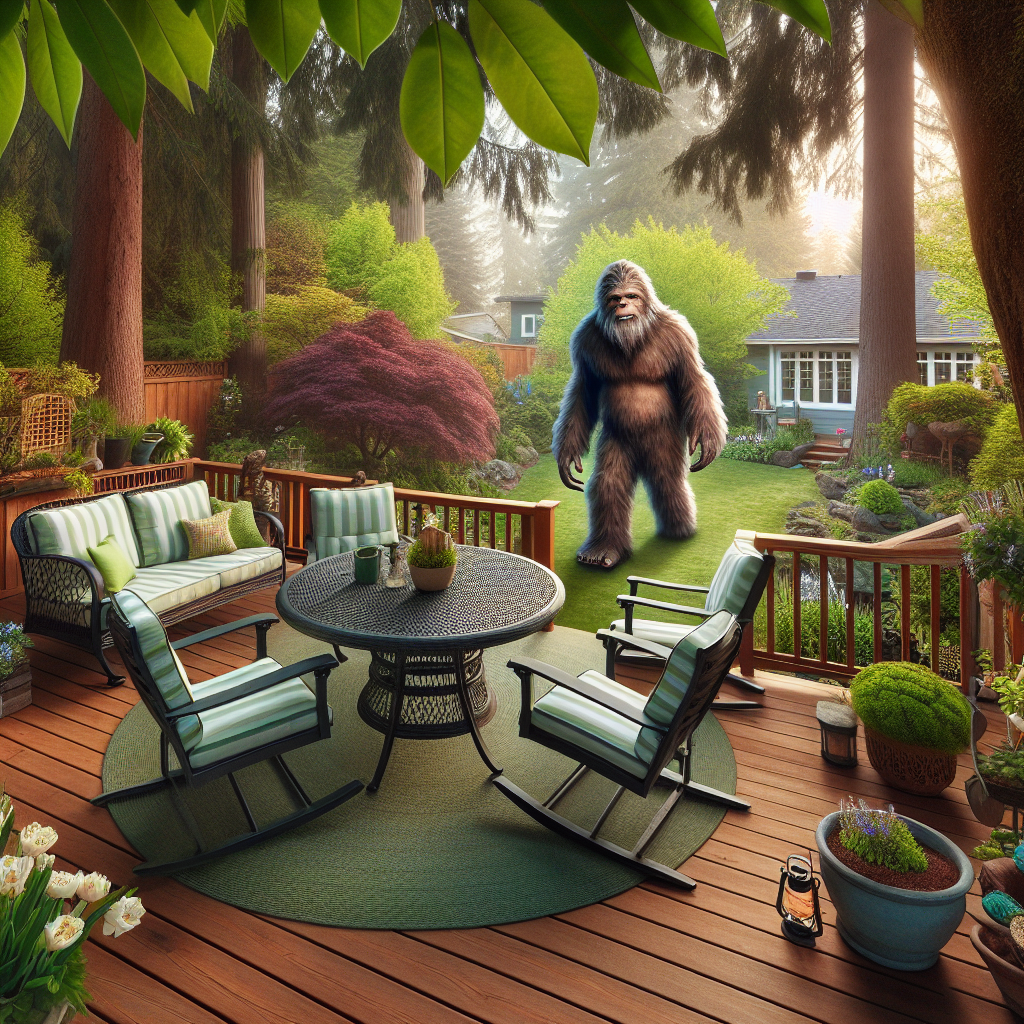
Spring Patio Furniture That Actually Lasts: Willy's No-BS Material Guide
I'll tell you what—March rolls around every year, and I watch the same thing happen. Folks drag out last season's furniture, stare at the rust stains and peeling paint, and think, "Well, I guess I'm buying new stuff." Then they wander into a big box store, grab whatever's on sale, and make the same mistake again. I've been watching this for long enough that I figured somebody ought to talk about what actually survives a Pacific Northwest winter, or any winter for that matter.
The thing about outdoor furniture materials is that marketing teams have gotten real good at making you believe a coat of paint and a catchy name equals durability. It doesn't. What you need is something that can handle UV exposure without fading into ghostliness, moisture without rotting from the inside out, and temperature swings without warping like a wet piece of cardboard. And here's the good news: materials that do this exist. You just have to know which ones.
Teak: The Gold Standard (And Why It Costs What It Does)
Start with teak, because if I'm being honest, it's the furniture equivalent of a good 401k. Yes, it costs money upfront. A teak dining set will run you $2,500 to $4,500 easy. But a few summers back I watched a neighbor drop money on a teak lounge chair, and that thing is still sitting on her deck looking practically identical to day one. We're talking fifteen years now, no coating, no maintenance beyond an occasional wipe-down.
Why? Teak has natural oils built right into the wood. Those oils repel water the way my fur sheds rain—it just doesn't stick around. The wood doesn't rot, doesn't really rust (obviously), and doesn't need sealing or staining to survive. It'll go a little silvery-gray if you leave it out naked to the elements, but that's weathering, not deterioration. The structural integrity stays solid.
Now here's the thing: not all teak is created equal. Grade A teak from Indonesia or Thailand is what you want. Some places try to pass off lower grades under the same name, but they're using sapwood that'll check and crack. Look for certifications, ask where the teak was sourced, and don't apologize for asking questions. This is money we're talking about.
Real talk though—if your budget maxes out around $800, teak isn't your answer. Which brings me to what most people actually buy.
Aluminum: The Practical Choice
Listen, aluminum gets overlooked because it doesn't have the prestige story that teak does. Nobody's going to tell their friends, "Oh, that's my aluminum sectional." But aluminum is probably the smartest material for most homeowners who want rust-resistant outdoor seating that won't demand your firstborn.
The science here is straightforward. Aluminum doesn't rust. It's lighter than you'd think—a four-person aluminum dining set weighs about 40 pounds compared to a wood equivalent at 120 pounds. That matters if you like rearranging things or storing furniture seasonally. And it holds up to salt air, which matters if you're anywhere near the coast. A powder-coated aluminum frame will last 10, 12, sometimes 15 years without flaking or degradation, especially if you're not leaving it exposed during the absolute worst months.
The catch: aluminum isn't great at holding heat or weight the same way other materials do. A very cheap aluminum frame can feel flimsy. You'll want something in the 1.5-inch to 2-inch frame diameter range, not those spindly 0.75-inch tubes. And if you live somewhere where freezing and thawing happens repeatedly, the joints can loosen over time. Not a dealbreaker, just something to know.
Budget-wise, you're looking at $600 to $1,500 for a decent weatherproof patio furniture set. That's accessible money.
Resin Wicker: Don't Write It Off
Most garden centers will point you toward resin wicker and say it's basically plastic, therefore forever. And look, that's technically true, but you're missing context. Resin wicker is either virgin resin (more expensive, more durable) or recycled plastic resin (cheaper, slightly more prone to fading). The difference matters if you want best deck furniture for spring and beyond.
Virgin resin wicker doesn't rot, doesn't absorb moisture, won't splinter, and handles temperature swings without cracking. I've seen wicker furniture that's fifteen years old and still functional. The frame underneath usually needs to be stainless steel or powder-coated aluminum—if someone tries to sell you wicker over a regular steel frame, keep walking.
Where resin wicker loses points is aesthetic consistency. UV exposure will fade the color. It won't deteriorate structurally, but that espresso-brown cushioned chair might look more like café-au-lait in five years. Covers help. Placement in partial shade helps more. Expect to spend $800 to $2,000 for a quality set, and know that you're banking on durability, not permanence of appearance.
Steel and Wrought Iron: The Hard Truth
I'm going to save you some money here: unless you're willing to maintain it, skip it. Traditional steel furniture rusts. Yes, there are coatings and treatments. Yes, you can paint over rust. But you're signing up for an ongoing project, not a set-it-and-forget-it situation. Wrought iron is even worse because of the weight and the number of fastener points where rust starts creeping in.
Stainless steel is different—it's genuinely rust-resistant, costs about 30 percent more than powder-coated aluminum, and looks sleeker. But honestly, for most people, aluminum does 95 percent of what stainless steel does for half the price.
Composite Decking Materials (and Why They're Not Furniture)
Don't confuse composite decking with composite furniture. They're different beasts. Some companies make seating from composite materials, and sure, they don't rot. But composite furniture is heavier, can retain heat in weird ways, and doesn't have the same design flexibility you get with wood, metal, or wicker. If the only reason you're considering it is durability—you've got better options.
What You Should Actually Buy This Spring
If you've got $1,500 to spend: aluminum frame with Sunbrella cushions (those fabrics are rated for 1,000+ hours of UV exposure and are genuinely stain-resistant). Lasts 12 years easy.
If you've got $2,500: teak with minimal cushioning. You'll be handing this off to your kids.
If you've got $800: resin wicker over aluminum frame. Accept that the color will mellow. Plan to replace cushions once during that 10-year span.
One thing I'll say: don't buy the cheapest option in any category. There's a floor where furniture stops being worth the money. That floor is usually around 30 percent above the absolute bottom price. A $150 aluminum chair is not the same as a $200 aluminum chair, even though both have aluminum frames. The difference is in the welds, the thickness, and the coating.
Back in my neck of the woods, we get rain from October through May some years. Heavy, relentless rain. I've watched furniture choices live or die based on material selection. The people with teak or quality aluminum sitting on their decks come June? They're not thinking about replacing anything. The people who bought whatever was on clearance? They're shopping again.
Your patio is an extension of your home. Treat the furniture selection like you'd treat picking a front door—something you're going to see every single day, that's going to take a beating from the elements, and that should still be standing solid a decade from now. That's not a big ask. You just need to know what to look for.