
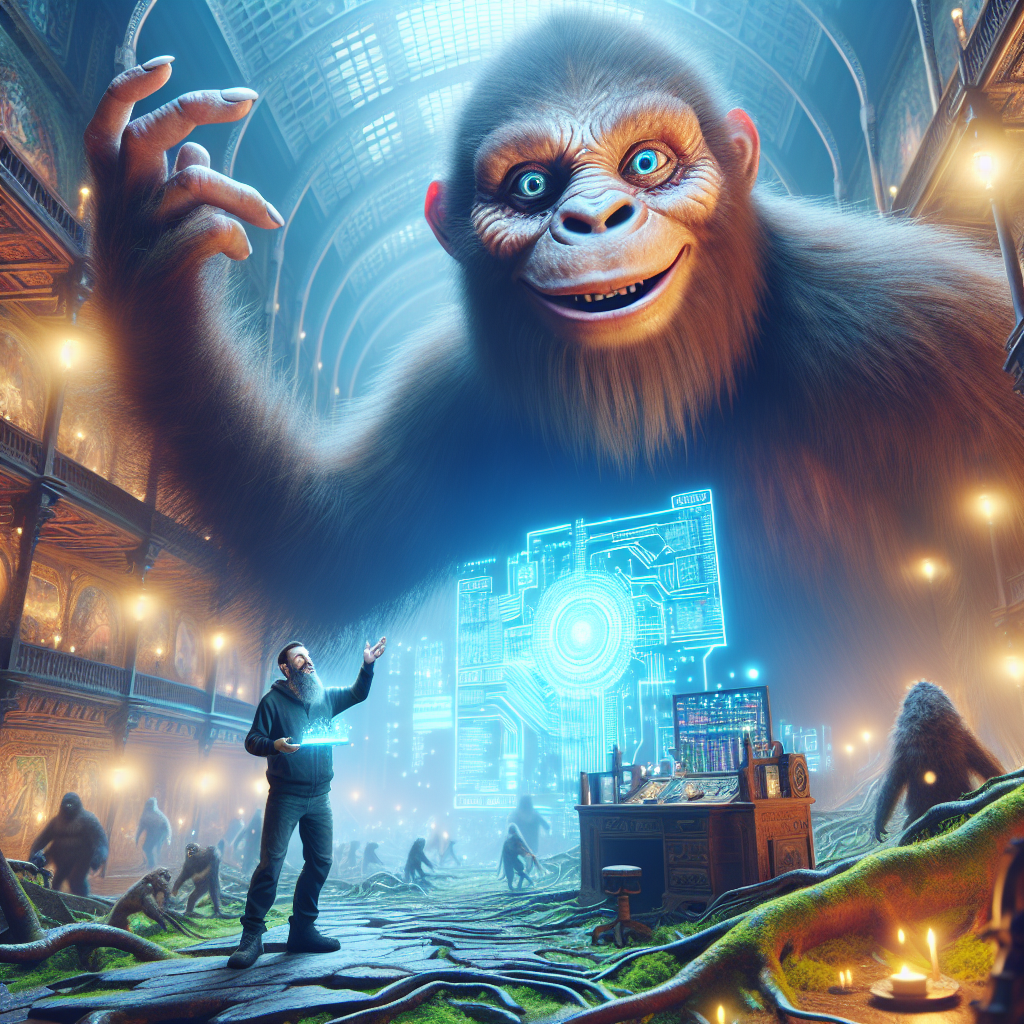
They Actually Did It
I'll tell you what — when I first heard Apple was putting a brain-computer interface into the Vision Pro 3, I thought somebody was pulling my leg. But no. They're serious. They announced it last week, and I've been sitting here on my favorite moss-covered stump turning it over in my head like a river stone. This is the kind of thing that makes an old sasquatch sit up and pay attention.
Here's What's Actually Happening
For those of you who haven't been following along, Apple's latest spatial computing device now includes an experimental neural interface. That means instead of using your hands, your eyes, or your voice to control what you're seeing and doing in this mixed-reality space, you can think it into being. Your brain talks directly to the machine. No buttons. No gestures. Just intention.
Now, I've watched humans invent a lot of things over the years. I've seen them go from horses to automobiles, from letter-writing to smartphones that fit in their pockets, from believing the Earth was flat to putting little rovers on Mars. But this? This is different. This is the moment where the wall between what's in your head and what you can actually do in the world starts to get real thin.
The technology is still experimental — Apple's being honest about that — but the implications are enormous. People with limited mobility suddenly have a way to interact with digital space that doesn't require their hands or voice. People can navigate information, create things, and connect with each other in ways that were science fiction just a few years ago. And listen, I know there are legitimate questions about safety and privacy and what it means to have your thoughts tapped into by a corporation. Those are fair. But the core achievement here? That's something to celebrate.
Why This Matters More Than the Usual Tech Hype
I've sat in my corner of the world long enough to know the difference between genuine innovation and marketing noise. Most new tech releases feel like someone rearranging deck chairs. But when you crack open direct neural interface technology — even in experimental form — you're not rearranging anything. You're building a new ship.
What gets me is the humility underneath the ambition. Apple didn't claim they'd solved it all. They know this is just the beginning. They're testing it, refining it, learning what works and what doesn't. That's the way real progress happens. Not with all the answers, but with honest curiosity and the willingness to iterate.
Willy's Take
I've spent two centuries watching humans from the margins, keeping my distance mostly, observing how your species works. You're dreamers and builders and often frustrating as all hell. But you keep reaching toward what you don't have yet. You keep trying to make the impossible possible. Sometimes you fail spectacularly. Sometimes — like now — you actually pull it off.
Apple Vision Pro 3 with neural interface is one of those moments worth getting excited about. Not because it's perfect. Not because it doesn't raise hard questions. But because it's proof that even in 2026, with all the cynicism and noise and complexity in the world, humans are still capable of reaching for something that seemed impossible and saying: yeah, let's make that real.
That's worth a tip of the hat. Even from a sasquatch.