
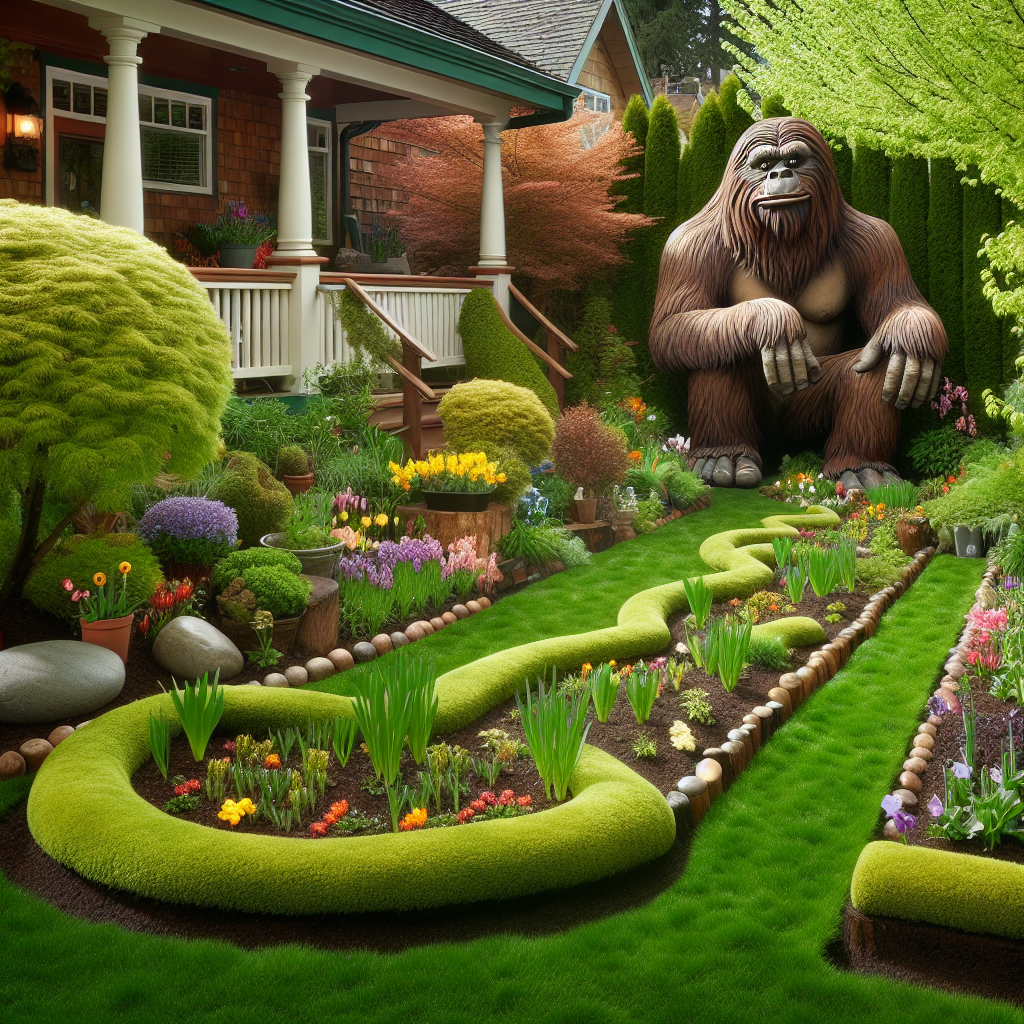
Spring Garden Bed Edging: Stop the Creep Before It Starts
Look, I've watched humans wage the same battle every single spring for longer than I care to admit. You mulch your beds in April, you're feeling pretty good about yourself, and by June the lawn's crept back in like it never left. Grass doesn't ask permission—it just moves. But here's what most folks don't realize: the edging material you pick in March is either going to save you three hours of pulling every August, or it's going to sit there looking pretty while doing absolutely nothing.
I'll tell you what separates a real garden bed from a failed one: the boundary. And not just the idea of a boundary—the actual physical barrier between soil and turf. This post covers the materials that work, how deep they need to go, installation methods that stick around longer than one season, and which options honestly aren't worth your money.
Why Edging Matters More Than Most People Think
You can have the richest, darkest mulch and the healthiest perennials in three counties. But if your garden bed has no edge, grass roots are already winning. Creeping bentgrass, Kentucky bluegrass, perennial ryegrass—they're all aggressive and they all want your garden bed real bad. A proper landscape edging installation does two things: it creates a physical barrier that grass can't cross underground, and it gives you something to push against when you're edging with a spade come mid-summer.
Back in my neck of the woods, a neighbor spent three full weekends pulling sod out of his beds one June because he'd used some flimsy plastic edging from a big-box store. Went about 2 inches deep. Grass roots laugh at 2 inches. He should've dug the trench 4 to 6 inches and chosen material with real mass.
Metal Edging: The Gold Standard (If You Do It Right)
Steel landscape edging—usually galvanized or Corten steel—is what I recommend when someone's actually ready to invest. A 10-foot section of 4-inch-deep galvanized steel runs about $25 to $35 depending on thickness. Corten steel costs maybe 30% more but it develops a protective rust patina that looks intentional rather than neglected.
Here's what makes metal work:
- It creates an actual barrier. Grass roots don't penetrate it. Period.
- It lasts 15+ years minimum, often 25 if you maintain it.
- You can bend it around curves without kinks—just use a rubber mallet and go slow.
- It doesn't rot, compress, or degrade in sunlight like plastic.
The downside? Installation matters tremendously. You need to dig a trench at least 4 inches deep, ideally 5 to 6 inches for aggressive perennial lawns. A walk-behind edger or a square-point spade works. Get the metal flush with the soil line—not sunk below (water pools), not sticking up (mower hazard). Once it's seated, backfill and tamp with your boot. Firm soil on both sides holds everything true.
Most garden centers will point you toward the thinner stuff—0.047-inch gauge—and look, it works fine, but you're mostly paying for the name and the easy transport. Go 0.063-inch if it's available. The extra few dollars buys you another decade of service.
Wood Edging: Warm but Temporary
Untreated wood—cedar, redwood, composite—looks beautiful spring through early autumn. That's the honest window. Cedar 2x8s or 2x10s are what you see in magazine photos, and I understand the appeal. They're warm. They age gracefully. Costs run $20 to $40 per 8-foot board depending on species and whether you're getting heartwood.
The reality: rot. Untreated cedar lasts about 5 to 7 years before it starts to break down where it meets soil. You'll find soft spots by year four. Treated lumber lasts longer—10 to 15 years—but modern pressure-treated wood smells like chemicals for months and some folks don't want that around edibles.
If you choose wood, install it at least 3 to 4 inches deep. Use landscape spikes or 3-inch stainless steel screws driven through the face into the ends of adjacent boards. Butt joints are weak—use corner braces if you're doing anything larger than a simple rectangular bed. And honestly? Plan to replace it. It's not a tragedy; it's just the material's nature.
Plastic Edging: Cheap, Cheerful, and Inconsistent
Plastic lawn borders—vinyl or polypropylene—run $0.50 to $2.00 per linear foot. You can edge a 50-foot bed for $25 to $100. That's the appeal. Installation is fast. No digging tools required beyond a utility knife.
Now here's the thing: not all plastic is created equal. The thin, corrugated stuff you find at big-box stores works acceptably for one season. By year two, UV exposure makes it brittle. Grass roots find gaps. It buckles during freeze-thaw cycles. I've seen it flip right out of the ground after winter.
Better plastic—brands like RootBarrier or EdgeGuard, running $1.50 to $3.00 per foot—is heavier and lasts longer. But still not metal. Still not wood. It's fine if you're renting, rotating beds, or just can't commit to permanent infrastructure yet.
Pro tip for plastic: bury it at least 4 inches, and flip the top edge slightly outward. This prevents grass from rolling over the top. Most people install it flush and wonder why it fails.
Stone and Brick: Beautiful, Passive, Works if You Prepare
Slate, limestone, bluestone pavers, or even reclaimed brick create that established, intentional look. A single row of 4x8-inch pavers costs about $2.00 to $5.00 per piece depending on stone type and source. For a 50-foot bed, you're looking at $25 to $60 in material alone.
Here's what stone does: it marks the boundary visually. But it doesn't stop grass and weeds underground—not unless you also install landscape fabric below. The stone itself sits on top of soil. Grass grows around and under it. You need a dual system: edging plus barrier cloth, which adds labor and material cost.
If you want stone as your primary edge, set it into a thin concrete base (1 to 2 inches deep, 6 inches wide). This creates a seal. Takes longer. More work. But it actually stops underground creep. Otherwise, stone is ornamental. Pretty, but not a weed-prevention system on its own.
The Installation Blueprint That Works
Whatever material you choose, follow this sequence:
- Mark the line. Snap a chalk line or run a string. Walk it twice. Commit to it.
- Dig the trench. 4 to 6 inches deep, square-edged. Don't cut corners—literally. Clean edges mean the edging sits flush.
- Level as you go. A 2-foot level and a 4-foot straightedge prevent wobble and settling.
- Install material. Whether metal, wood, or stone, make sure it's pushed down fully and backfilled firmly on both sides.
- Add landscape fabric (optional but recommended). Extends the life of any edging by reducing soil splash and weed seed contact. A 3-foot width overlapped at seams costs $0.50 to $1.00 per foot.
- Mulch on top. 2 to 3 inches of mulch covers the top of the edging and looks finished. Use arborist-grade mulch, not dyed stuff.
The entire job for a 50-foot bed takes a weekend with one person working at a reasonable pace.
Cost Comparison: What You're Actually Spending
For a standard 50-foot garden bed, 4 inches deep:
- Metal (galvanized steel): $125–$175 material. Lasts 20+ years. $6–$8 per year.
- Composite/Corten: $150–$250 material. Lasts 15+ years. $10–$16 per year.
- Wood (cedar): $100–$160 material. Lasts 5–7 years. $14–$32 per year.
- Plastic (quality): $50–$100 material. Lasts 3–5 years. $10–$33 per year.
- Stone with concrete base: $200–$400 material, labor-intensive. Lasts 20+ years. $10–$20 per year.
Metal looks expensive upfront but spreads the cost thinnest over time. Plastic looks cheap but surprises you with replacement frequency.
Weed Prevention Beyond Edging
Edging stops one problem. It doesn't stop all of them. Wind-blown weed seeds still land in your bed. Perennial weeds still creep in from the sides. Landscape fabric—landscape-grade, not the paper thin stuff—reduces this considerably. Lay it after your edging is installed, overlap seams by 6 inches, and top it with mulch. Total investment for a 50-foot bed: $30 to $60. Worth every cent.
And mulch refreshment is real. After one year, your initial 3-inch layer compresses to about 1.5 inches. After two years, you're seeing soil. Top-dress each spring with another inch or so. A 2-cubic-foot bag of quality mulch covers roughly 40 to 50 square feet at 1 inch depth and runs about $5 to $8.
Spring 2026: Getting Started This Month
If you're reading this in March, soil temperatures are warming but still manageable for digging. Installation is easiest before your perennials emerge and before you've fully mulched. Order your material now—lead times on quality steel can run 2 to 3 weeks. Get the fabric. Buy your mulch.
The difference between a garden bed that looks maintained and one that looks like it's losing a quiet war with the lawn is edging. Not flashy. Not sexy. But standing in your yard next August, looking at beds that haven't crept, you'll remember why you spent the weekend digging trenches in spring.
Your future self will thank you for it.