
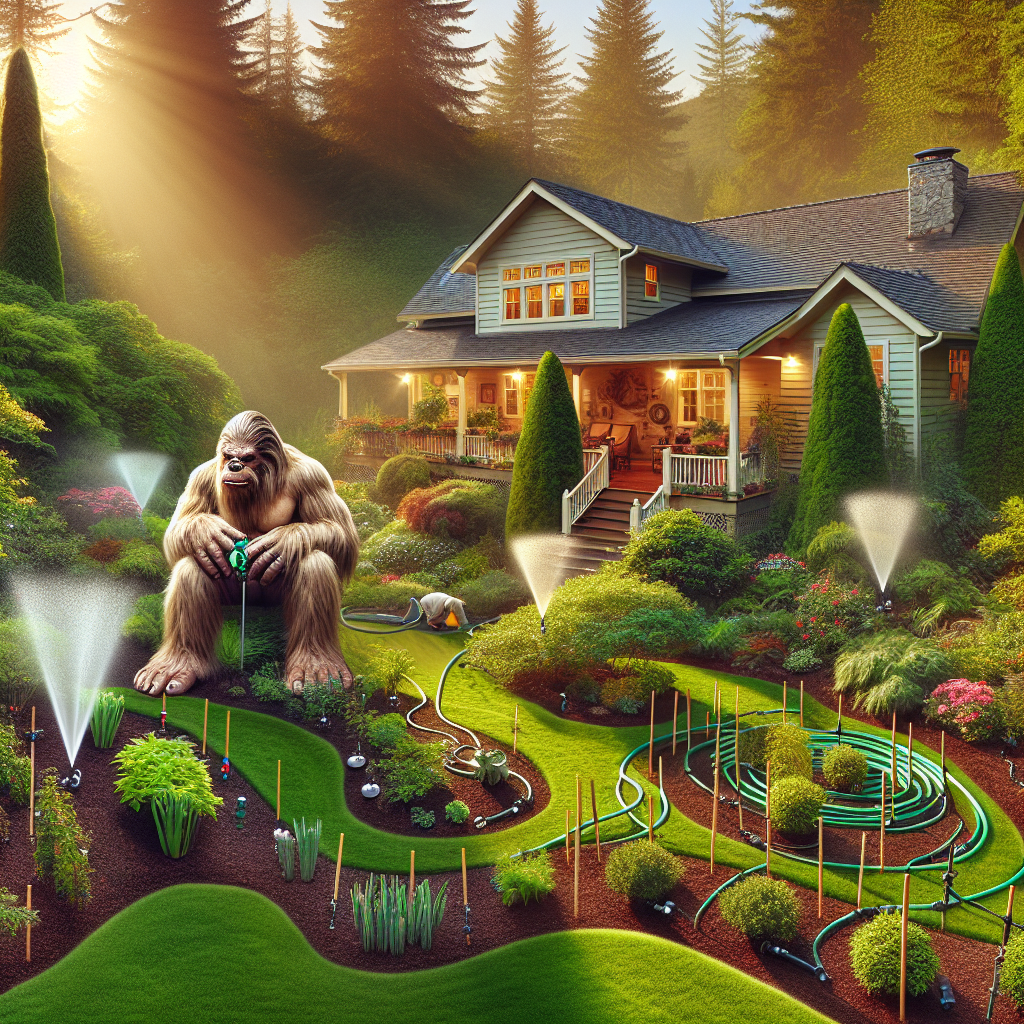
Stop Throwing Water Money Into the Air
I'll tell you what—I've been watching humans water their lawns for forty-some years, and most of you are doing it wrong. You stand there with a hose or flip on a sprinkler that sprays water everywhere except where the plants actually need it. Half of it evaporates before it hits the soil. The other half runs off into the street. Your water bill climbs. Your plants stay thirsty. It's the kind of problem that shouldn't exist.
A few summers back I watched a neighbor spend three weekends hand-watering during a dry spell, dragging hoses around in ninety-degree heat, complaining about his water bill the whole time. Meanwhile, another neighbor two houses down had installed a basic drip irrigation system the previous spring. That second neighbor watered less, spent maybe twenty minutes per month tending it, and his garden looked better than the first guy's. The difference? One system was designed to deliver water exactly where roots live. The other was hoping for the best.
A proper drip irrigation installation cuts water use by 40 to 50 percent. You read that right. Not 10 percent. Not 15. Forty. And here's the good part—most DIY systems pay for themselves in a single season. After that, it's straight savings.
Why Drip Works Better Than Everything Else
Listen, sprinklers have their place. But for gardens, vegetables, and ornamental beds, drip irrigation installation is the only move that makes sense. Water drips slowly, directly onto soil near plant roots. Nothing gets wasted on hardscape or blown away by wind. Plants absorb what they need. Soil stays consistently moist without flooding. Fewer diseases because leaves stay dry. Fewer weeds because water goes to plants, not bare ground.
Conventional sprinkler systems are about 60 to 70 percent efficient on a good day. Drip lines run 85 to 95 percent. That gap? That's your water bill. That's also the reason your neighbor's tomatoes outperformed yours last July.
And here's a genuine opinion: most garden centers will steer you toward fancy smart controllers with WiFi and apps that cost $300 and do more than you need. Skip it. A simple battery-operated timer with a soil moisture sensor does everything that matters. You'll spend $40 instead of $300, and your plants won't know the difference.
What You'll Actually Need
Before you start digging, gather your gear. A proper spring sprinkler setup doesn't require much.
- Drip line tubing (usually 1/2-inch or 5/8-inch diameter)—get 50 to 100 feet depending on garden size. Toro and Raindrip make solid, reasonably priced options.
- Drip emitters (0.5 to 2 gallons-per-hour models). These are the small components that actually release water. Start with 1 GPH for tight plantings, 2 GPH for larger beds.
- Connectors, tees, and end caps—basically the joints that hold everything together. Grab an assortment kit. It's cheaper than buying pieces one at a time.
- A pressure regulator—this keeps water pressure at a level drip tubing can handle (usually 20 to 30 PSI). Most systems need this unless you want leaks at every fitting.
- A battery timer (around $35 to $50). Something simple. Weatherproof, variable cycle options, that's all.
- Soil moisture sensor (optional but smart, $20 to $30). This prevents overwatering on rainy weeks.
- Mulch—a 50-pound bag of cedar chips or compost. Drip lines work better when covered. It keeps them cool and helps soil retain moisture longer.
Total investment: roughly $150 to $200 for a system covering 500 to 800 square feet. Bigger gardens cost more, but the percentage savings stays the same.
Installation: Do It Yourself, Do It Right
Now here's the thing—this isn't complicated work. It's patient work. There's a difference.
Step one: Plan your layout. Sketch your garden beds on paper. Mark where main drip lines run and where emitters go. One emitter per plant, roughly. Space them around 12 to 18 inches apart depending on plant size. Tomatoes, peppers, and larger plants get their own emitters. Dense groundcover gets lines spaced closer. This takes maybe thirty minutes and saves hours of rework.
Step two: Prepare the bed. Clear away mulch and debris from planting areas. You'll put mulch back after lines are down. Rake soil level. Slightly raised beds make water distribution more even.
Step three: Lay the main line. Run your 5/8-inch supply line from the spigot or water source along the edge of your garden bed. Keep it straight where possible. Use stakes to anchor it every few feet so wind and foot traffic don't shift it. Connect your pressure regulator where the line meets the spigot—don't skip this part. A regulator costs $15 and prevents the whole system from bursting.
Step four: Connect secondary lines and emitters. Use tees and connectors to branch smaller 1/2-inch drip line into planting beds. This is where it gets a little fiddly but also where you actually control water delivery. Attach emitters by punching small holes in the tubing (special punch tools cost $8), then insert emitters into those holes. Position each emitter within 6 inches of a plant root zone.
Step five: Test and adjust. Turn on the water. Watch for even dripping. Look for pressure leaks at connections—you can usually tighten fittings with your hands. If an emitter is too close to root or too far, pop it out and move it. This is exactly what you should be doing at this stage.
Step six: Cover and set timer. Once everything runs clean, mulch over the lines. This protects tubing from UV damage and keeps soil temperature stable. Attach your battery timer to the spigot. Program it to run early morning (5 to 7 AM) for 30 to 45 minutes. Morning watering means plants have moisture through the day without evening wet foliage that breeds mold.
The Math That Actually Matters
Let's talk ROI because that's what matters at the end of the month. Average household uses 300 to 400 gallons per day watering landscape during spring and summer. A 40 percent reduction means you're cutting 120 to 160 gallons daily during irrigation season.
Most municipal water systems charge $4 to $8 per 1,000 gallons. Let's use $5. A reduction of 140 gallons daily across 150 days of irrigation season equals 21,000 fewer gallons. At $5 per 1,000 gallons, that's roughly $105 saved per season. Some folks in drier regions see double that.
You spent $175 on equipment. You save $100 to $200 in year one. Year two and beyond, it's pure savings. Even accounting for tubing replacement every 5 to 7 years, the math is straightforward. One season pays it back.
Water-efficient gardening isn't trendy or complicated. It's just smarter. Fewer resources used, better results, less money out of your pocket. That's the kind of thinking that should be default.
Spring Sprinkler Setup: Maintenance Habits That Matter
Once your system is running, keep it simple. Check emitters every two weeks during growing season. Make sure nothing's clogged. If water pressure drops, there's likely a small blockage somewhere in the line—usually just debris. Flush the system by removing an end cap and letting water run for a minute or two.
At the end of fall, drain lines completely before frost. Cap the spigot and secure loose tubing. Come spring, pressure-test everything again before you fully rely on it. Takes an hour. Prevents expensive ruptures.
Reduce water bills further by pairing drip irrigation with good mulch habits and soil that actually retains moisture. Add 2 to 3 inches of compost or wood chips to beds annually. Healthy soil holds water like a sponge. Poor soil drains like concrete. The combination of drip irrigation plus good soil is where you'll really see your water use drop and your plants genuinely flourish.
The neighbor I mentioned earlier? Still using that same system twelve years later. Changed out tubing twice, replaced emitters here and there, but the setup runs exactly like it did the day he installed it. No fancy tech. No complications. Just water getting where it needs to be, when it needs to be there. That's how you do it.