
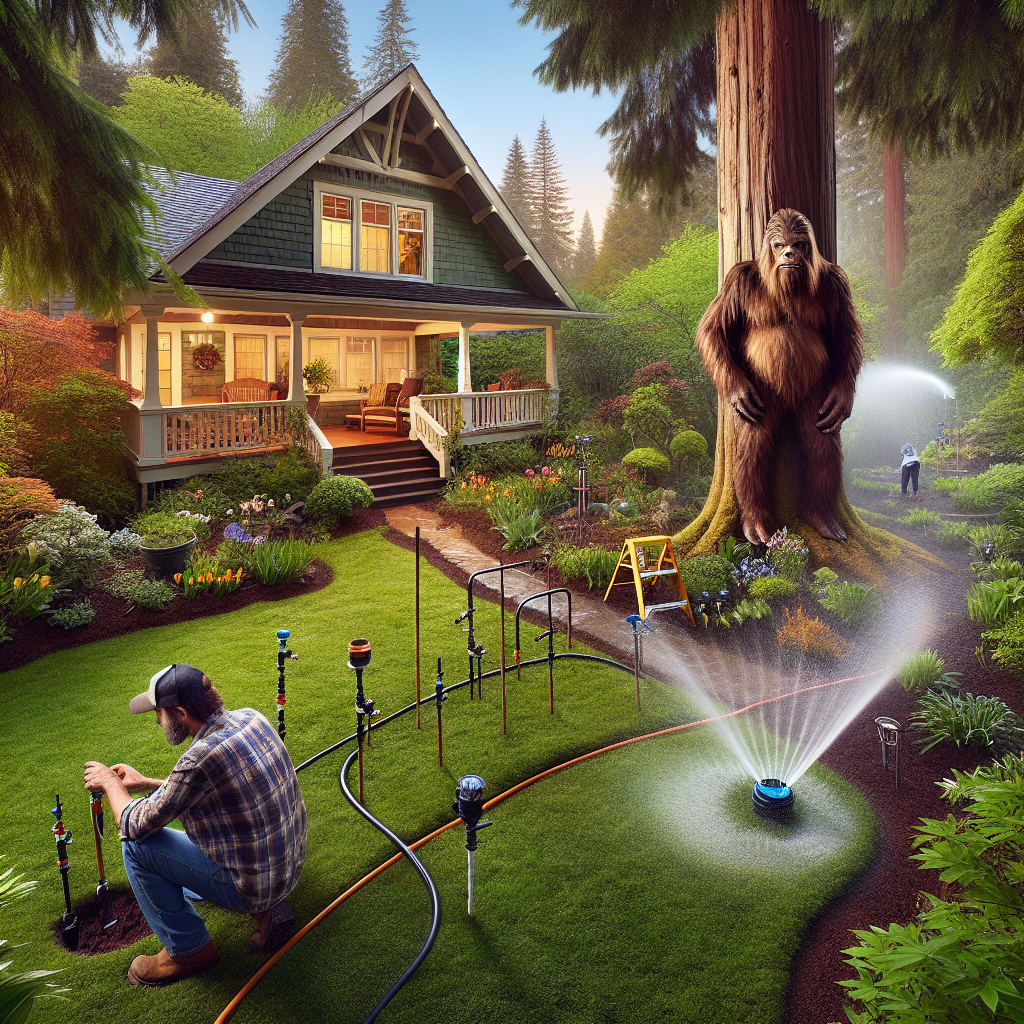
Spring Irrigation System Installation: Which Setup Actually Pays for Itself
Most folks wait until June when it's 85 degrees and their grass is already brown before they think about upgrading their watering system. That's backward. March and early April are when you should be getting your spring irrigation system installation done—before the real heat settles in and water bills start climbing.
I've spent the better part of thirty years watching neighbors tinker with their yards, and I can tell you this: the difference between a thoughtless watering setup and a deliberate one isn't just about keeping your plants alive. It's about not hemorrhaging money every month when the water bill comes. Listen, I've seen a single homeowner waste more water in one summer than I'd use in five years, all because they never bothered to think about the actual mechanics of how water gets to their garden.
That ends now. Let's talk about what actually works, what it costs upfront, and more importantly—what it costs you over time.
The Sprinkler System: Familiar, Wasteful, and Mostly Expensive Theater
Here's the straight truth: most garden centers will point you toward a conventional sprinkler system—and look, it works fine, but you're mostly paying for the name and the ease of installation. A basic above-ground sprinkler network might run you $200 to $500 in parts if you're doing it yourself, maybe double that if you hire someone to bury the lines.
The appeal is obvious. You turn it on, water goes everywhere, your lawn looks like it's getting watered. Problem is, so are your sidewalk, your neighbor's fence, and approximately 30 to 50 percent of the sky. Studies on irrigation efficiency put spray sprinklers at around 50 to 75 percent efficient—meaning a quarter to half your water is just leaving the yard entirely through evaporation and overspray.
- Installation cost: $200–$900 DIY; $800–$2,500 professional
- Water efficiency: 50–75%
- Monthly water usage: High (15,000+ gallons for a typical suburban lot)
- Maintenance: Moderate (seasonal startup/shutdown, occasional nozzle adjustment)
Now, there's nothing wrong with sprinklers if you don't mind your water bill and you're comfortable with a bit of waste. But if you're reading this in March because you actually want to think ahead for once, you can do better.
Drip Irrigation vs. Sprinklers: The Long Game
A few summers back I watched a neighbor spend three weekends installing a drip irrigation system. He was meticulous—ran black poly tubing along every garden bed, clipped in drip lines with half-inch spacing between emitters, even ran a separate zone for his vegetable garden. By mid-July, his tomatoes and peppers were thriving while everyone else's were stressed. His water bill was also about 40 percent lower than the previous year.
That's drip irrigation. I'll tell you what, once you understand the concept, it's hard to go back.
A drip irrigation vs sprinkler comparison comes down to this: drip systems deliver water slowly, directly to the soil at or near the plant root zone. No spray. No evaporation. No guesswork. You're using somewhere between 25 to 50 percent less water than you would with sprinklers, and the plants actually get what they need instead of what the wind carries them.
Upfront cost for a basic DIY drip irrigation setup runs $300 to $700, depending on yard size and layout complexity. Professional installation might push it to $1,500 to $3,000. Sounds pricey until you do the math on water savings.
Setup itself is straightforward if you're comfortable with basic plumbing-adjacent work. Main line from your spigot or existing system, then branch lines, then emitter tubing. Most DIY folks can handle it in a weekend or two. You'll need a timer and a simple filter, but that's not complex.
- Installation cost: $300–$700 DIY; $1,500–$3,000 professional
- Water efficiency: 85–95%
- Monthly water usage: Low to moderate (6,000–10,000 gallons for same yard)
- Maintenance: Low (occasional filter cleaning, check for clogs seasonally)
The payback happens fast. If you're currently using 20,000 gallons a month during growing season and a drip system cuts that to 8,000 gallons, and your water runs about $2 per 1,000 gallons (varies by region—check your own bill), you're saving $24 a month. Over a five-year period, that's nearly $1,500 in water savings alone. Your installation cost pays for itself in less than six months.
Smart Irrigation Controllers: The Bridge Between System and Sense
Now here's the thing—a smart irrigation controller won't matter much if your basic setup is already inefficient. But if you've got a decent system in place, a smart controller is where the real modern advantage lives.
These devices learn your landscape, your soil type, and your local weather. Brands like Rachio, Hunter Hydrawise, and Orbit B-hyve connect to WiFi, pull real-time weather data, and automatically adjust watering schedules based on rain forecasts, temperature, and soil moisture. You're not watering the day after a half-inch of rain. You're not running sprinklers at midday when evaporation is maximum. The system adapts.
Cost for a basic smart controller is typically $75 to $200. Installation is often just swapping out your existing timer, so no labor cost if you're doing it yourself. The water savings stack on top of whatever system you're already using—studies suggest 15 to 30 percent additional efficiency.
Pair a smart controller with a drip irrigation system and you're looking at 90+ percent efficiency. That's real science, not marketing.
Building Your Spring Irrigation Setup: The Real Decision
Let's be practical. You've got three main paths forward, and the right one depends on your specific situation.
Path One: You've got nothing and you want cheap upfront. Install a basic sprinkler system now. Acknowledge you'll pay more in water later, but you're not broke this spring. This is fine. You can upgrade later.
Path Two: You want efficiency and you're willing to spend moderate money upfront. Build a drip irrigation vs sprinkler hybrid. Use drip lines for beds, shrubs, and vegetables. Use micro-sprinklers only where absolutely necessary (maybe turf areas if you must). Add a basic timer. This is where most folks should actually be.
Path Three: You want the best setup and you're willing to invest properly. Drip irrigation throughout, smart irrigation controller, maybe a soil moisture sensor for your vegetable garden. Run zones so you can adjust watering needs independently for different areas. This setup pays dividends every single summer.
Most new spring irrigation system installation projects come in around $500 to $1,200 for DIY drip work plus a smart controller. That's reasonable money for something that runs every year for a decade without breaking.
Real-World Water Savings Math
Back in my neck of the woods, average residential water use during peak season is about 400 gallons per day for a house with lawn and landscaping. That includes indoor use, but the outdoor portion is substantial.
A house with standard sprinklers might be using 150+ gallons daily just for landscape watering. Same house with a water-efficient landscape watering setup using drip irrigation and a smart controller? You're looking at 60 to 80 gallons daily for the same plants, kept healthier, with better soil moisture retention.
That's a 50 percent reduction. Over a six-month growing season, that's roughly 13,000 gallons of water saved. If your local rate is $2.50 per 1,000 gallons, you just saved $32.50 a month. Scale that to your actual local rates and yard size—the number probably surprises you.
Toss in the environmental angle if that matters to you, and you're not just saving money. You're not draining aquifers so your fescue can look perfect in July.
One More Thing Before You Start
Check your water pressure before you buy anything. Most drip systems work best between 20 and 60 PSI. If you're above 60, you'll need a pressure regulator (another $15 to $25). If you're below 20, you might have trouble getting emitters to flow evenly. This takes five minutes to check with a simple gauge from any hardware store.
Also, now's the time to sketch your yard. Mark your plants, note sun exposure, identify existing water sources. A ten-minute drawing saves hours of frustration when you're actually installing.
March is here. Your irrigation system isn't getting cheaper, and the heat's coming whether you're ready or not. A water-efficient landscape watering setup doesn't have to be complicated, but it does have to be thoughtful. Pick your path, do the work while the weather's still cool, and come August when everyone else is panicking about their brown lawns and $300 water bills, you'll be quietly sipping coffee and enjoying the season. That's worth something.