
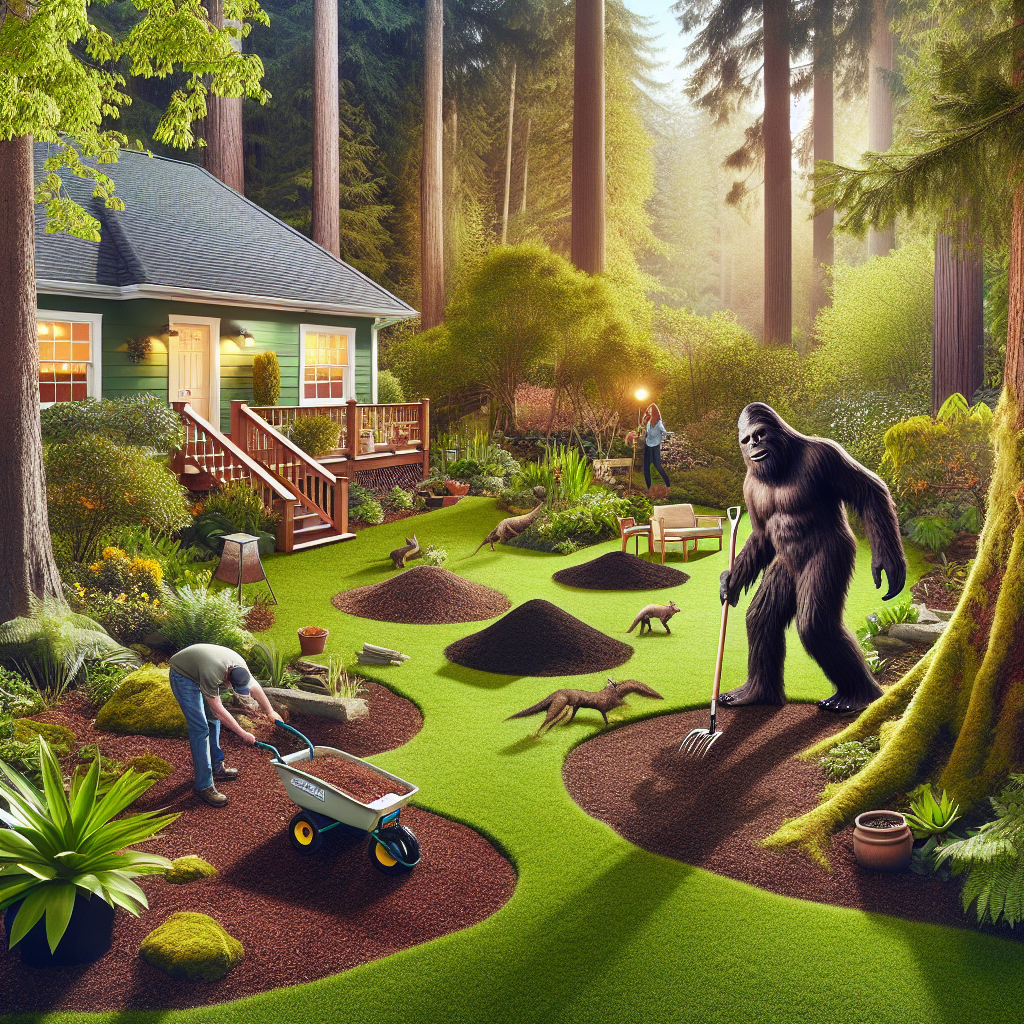
Spring Mulch Installation: A Sasquatch's Honest Take on Mulch Types, Depth & Cost
I've been watching you folks refresh your garden beds every March for about forty years now, and I'll tell you what—most of you are either overdoing the mulch or undershooting it by a mile. Neither one makes sense. Spring mulch installation isn't complicated, but it does require thinking about a few things before you haul twenty bags into your truck and find out you've only got half what you need. Let me walk you through this the way I'd explain it standing over your flower beds on a Saturday morning.
Why Spring Matters for Mulch (And Why Most People Get It Wrong)
Winter's done beating up your landscape. Frost heaves soil, snow cover gets pulled back, and all those gaps that opened up in your mulch layer are just sitting there waiting to dry out your root zones the moment April sun hits them. That's when you refresh. Not too early—frozen ground makes the work pointless. Not too late—you'll be fighting weeds that already got a head start. Right now, in mid-to-late March, is the sweet spot in most of the Pacific Northwest.
Now here's the thing: mulch does two jobs that matter. It keeps weeds from establishing by blocking light, and it holds moisture in the soil so you're not watering every other day come July. Most people think about the first job and ignore the second, then wonder why their hydrangeas look thirsty by midsummer. Both reasons matter equally.
The Main Types: What Actually Works in 2026
Garden centers will sell you about eight different mulch varieties, and honestly, half of them are marketing. Here's what you're actually choosing between:
- Shredded bark (Douglas fir or cedar): The workhorse. Breaks down slowly, looks tidy, smells good when it's fresh. Cedar's pricier but lasts longer and repels some insects. A cubic yard of shredded Douglas fir bark runs $35–$50 depending on your region. Cedar's $55–$75. Back in my neck of the woods, I see people reaching for this nine times out of ten, and it's because it actually performs.
- Wood chips: Bigger, chunkier pieces. They last longer than shredded bark—we're talking two to three years instead of one to two. They also decompose slower, which means less nitrogen depletion in your soil if that's a concern. They're messier looking initially and settle unevenly. Costs about the same as shredded bark, $40–$60 a cubic yard.
- Compost-based mulch: Ground up, aged wood and organic matter mixed together. This breaks down fast—one season in some cases—but it's actually feeding your soil as it does. It's darker, richer looking. Plants genuinely perform better in beds mulched this way because you're not just suppressing weeds, you're building the soil bed year over year. Most expensive option: $60–$85 per cubic yard. If you've got ornamental beds with perennials or shrubs you're planning to keep for years, this earns its price.
- Straw or hay: Listen, I see people use these for vegetable gardens and new plantings. They work fine for that. But they blow around, compact into a crust, and break down in one season. If you're doing ornamental landscape mulch, skip this.
- Recycled mulch: Ground-up landscape waste, mixed wood, sometimes asphalt shavings. Cheap—$20–$35 a yard. Inconsistent quality. You might get good material or you might get something that's mostly sawdust and treated wood. It's a gamble. Most garden centers don't label this clearly enough, which bothers me.
My honest opinion: spend the extra $15–$20 per cubic yard and get shredded cedar or a quality compost blend. You'll replace it less often and your plants will thank you. Most garden centers will point you toward basic Douglas fir because the markup's tighter—and look, it works fine, but you're mostly paying for the name and convenience. Cedar actually performs better for the money if you're willing to wait a season for prices to settle.
Mulch Depth Guidelines (And Why "Just Eyeball It" Doesn't Work)
This is where I watch most people fail. There's a right depth, a too-shallow depth, and a "oh no, I just smothered my shrub" depth.
The target is 2 to 3 inches. Measure it. Get a ruler, stick it in the mulch, and check your work before you step back and call it done. Two inches is the minimum if you want actual weed suppression and moisture retention. Three inches is the sweet spot for ornamental beds where you've got established shrubs and perennials. Anything deeper than 4 inches and you're risking root rot, especially in our wet springs. The mulch holds too much moisture against the base of woody plants, and fungal problems move in.
Here's the mistake I watched a neighbor make three summers back: he piled mulch 6 inches deep around his Japanese maple because he thought "more mulch, fewer weeds." By mid-June the lower trunk was soft. He had to scrape it back, but by then the damage was done. The tree spent two years recovering. Don't be that person.
Keep mulch a few inches away from the base of shrubs and tree trunks. Create a small ring of bare soil around the stem. Air needs to circulate. Water needs to reach the soil, not just sit in a mulch dam around the bark.
The Mulch Cost Calculator (And How to Avoid Overspending)
Here's how you calculate what you actually need instead of guessing and overpaying. It's simple math.
Measure your bed length and width in feet. Multiply them. That's your square footage. Let's say you've got a 20-foot bed that's 4 feet wide. That's 80 square feet. To cover that at 2.5 inches deep, you need roughly 0.6 cubic yards of mulch. One cubic yard covers about 135 square feet at 2.5 inches. A cubic yard is 27 cubic feet—that's how mulch gets priced and delivered.
If your landscaping mulch DIY project covers 400 square feet at 2.5 inches, order 3 cubic yards. If it's 800 square feet, order 6 yards. Add 10% for settling and uneven coverage.
Most bulk mulch costs $40–$65 per cubic yard (shredded bark, cedar, decent compost blends). Delivery usually runs $40–$60 if you're within 10 miles of the supplier. A 6-yard order at $50 per yard plus $50 delivery is $350. The same area in bags—say 50-pound bags covering about 8 square feet per bag—would take 50 bags at $4–$6 each, plus your time hauling them. You're at $200–$300 just in bags, and you've spent a Saturday morning loading a truck. The math favors bulk for anything over 300 square feet.
Installation: Do It Right Once
Clear out old mulch if it's matted or more than three years old. Pull weeds. Rake the bed smooth. If you're fighting established perennial weeds, lay cardboard or landscape fabric before the mulch goes down—that's your real weed barrier, not the mulch itself. Landscape fabric lets water through and degrades over time, which is what you want.
Spread mulch with a shovel or garden fork, working in sections. Don't just dump and push it around with your hands like you're making a giant bird's nest. Use the depth guidelines to keep it consistent. Step back every 50 feet or so and eyeball the coverage. It should look like a clean, even blanket, not a pile of straw.
Water the bed after you're done. Mulch needs moisture to settle properly and start its job. If it's a dry March day, give it a good soaking.
One Last Thing
Mulch isn't a set-it-and-forget-it thing. Top it up in late summer or early fall with a thin layer—maybe an inch—to replace what's decomposed and settled. That keeps your depth right without overloading the soil. Come next spring, you'll probably pull back about half of what you put down this year and add fresh mulch on top. It's part of the rhythm of landscape maintenance, and honestly, it's not a bad job to do on a Saturday morning.