
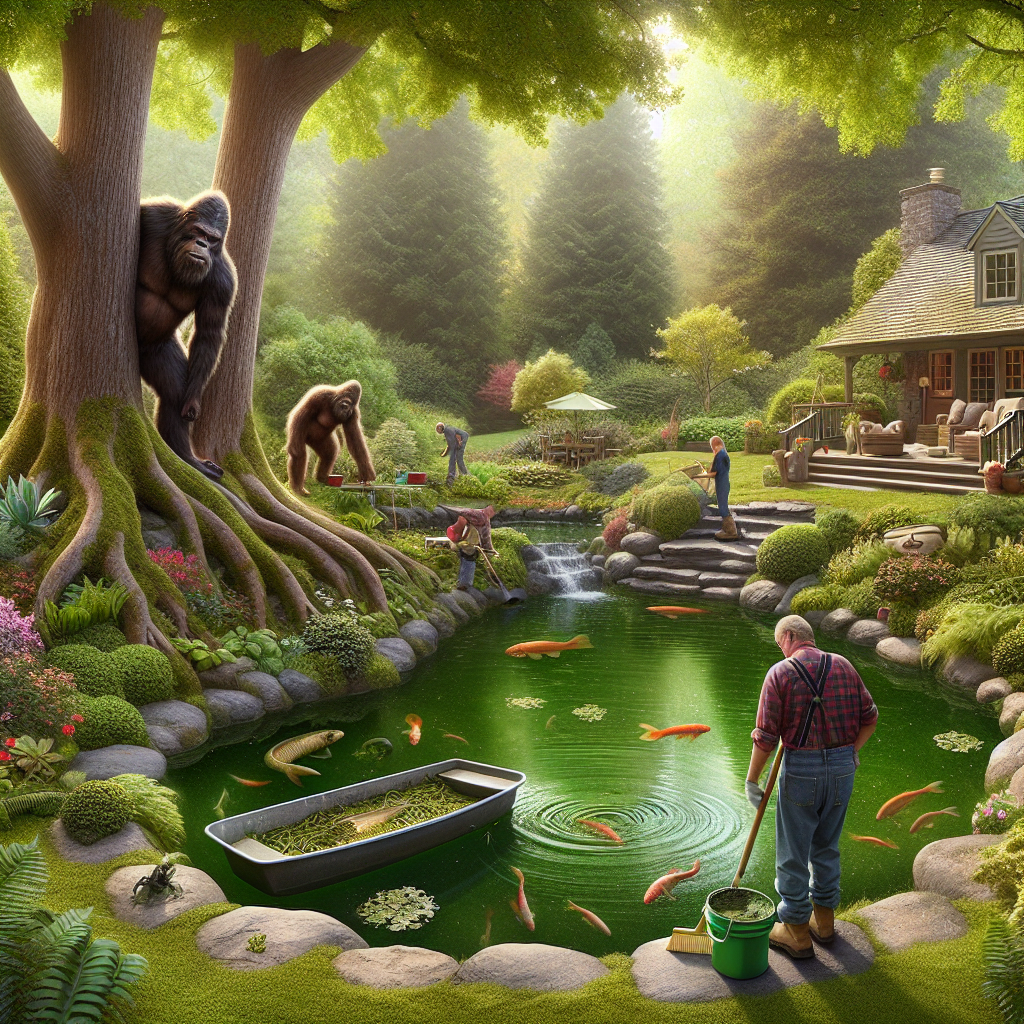
Spring Pond Cleaning: Remove Winter Algae Before Your Fish Kill Season Starts
Your pond's been sitting under ice and leaves for months, and right now—March, early April—it's a ticking clock. I've watched enough neighbors ignore their water features through winter to know exactly what happens next: algae blooms, dead fish, and a $500-to-$3,000 cleanup bill that could've been prevented with a Saturday afternoon of actual work.
Listen, I get it. Ponds aren't glamorous. You can't see them under snow. But the moment water temperatures start climbing past 50 degrees, all that decomposed leaf matter and sludge sitting on your pond bottom becomes fertilizer for an algae explosion. Once that happens, your water turns pea-soup green, oxygen crashes, and your koi or goldfish suffocate. I'll tell you what—I'd rather spend four hours pulling muck in March than dig through two feet of dead fish in June.
Why March and April Are Non-Negotiable
The timing isn't random. Right now, water temps are cool enough that algae is still dormant and fish metabolism is slow. That means they won't panic when you drain the pond or temporarily disrupt their environment. But in another four weeks? The water warms up. Algae wakes up hungry. And you've missed your window.
A few summers back I watched a neighbor ignore his koi pond maintenance March window. By June, he'd spent a weekend pulling out 40 pounds of black sludge, replaced half his plants, lost eight koi, and bought an expensive new aeration system. He could've prevented all of it for the cost of a couple bags of pond vacuum supplies and maybe a rental aerator.
The math is simple: invest four hours now, or invest four grand in June.
What Winter Actually Does to Your Pond
Under the ice, everything that fell into your pond—leaves, pine needles, dead plant material—settles to the bottom and starts decomposing. That sludge layer gets thick. It consumes oxygen as it breaks down, which kills beneficial bacteria colonies and creates the perfect storm for anaerobic decomposition. You end up with hydrogen sulfide gas, ammonia buildup, and a pond that smells like a swamp.
Then spring arrives. Water temps rise. Sunlight gets longer. And boom—algae growth explodes because now there's a thick nutrient-rich sludge layer fueling it, plus plenty of nitrogen from all that decomposing organic matter. Your water garden sludge removal isn't optional; it's the foundation of everything else.
The Spring Pond Care Plan: Step by Step
You don't need to drain the whole pond, though some folks do and it's fine. Here's what actually works:
- Remove debris from the surface. Grab a net and pull out any leaves, branches, and junk floating on top. Takes 20 minutes, saves you later.
- Turn on aeration and filtration. Even if your pond's been quiet all winter, get that water moving and circulating. Stagnant water is algae's best friend.
- Skim the bottom and sides. Use a pond vacuum or a soft-bristled brush to loosen and remove sludge buildup. You won't get it all—you don't need to—but removing 60–70% makes a real difference.
- Check and clean your filter media. Winter gunk clogs your mechanical filter. Rinse it in pond water (not tap water, which kills the good bacteria). A 20-inch filter cartridge might cost you $35-$50, but a clogged one lets algae-feeding nutrients slip through.
- Test your water chemistry. Grab a basic master test kit—API makes a good one for around $25. You're looking for ammonia near zero, nitrite near zero, and a pH between 6.5 and 8.0. If ammonia or nitrite is high, do a 25% water change and skip feeding fish until levels drop.
Algae Removal Water Feature Strategy
Now, about that green water and algae on the sides. Most garden centers will point you toward algaecide chemicals—and look, they work fine for maybe a week, but you're mostly paying for the name and you'll need to reapply constantly. Better approach: address the root cause first.
Black algae (the dark coating on rocks and plastic) comes off with a stiff brush and patience. It's annoying but not a pond killer. Green water algae—the pea-soup kind—only thrives if you have excess nutrients and sunlight hitting the water with no competition.
Add floating plants. Seriously. Water lilies, pickerel rush, or even simple duckweed will shade the water and compete with algae for nutrients. They won't solve the problem alone, but they're part of the system. You can grab bare-root water lily plants for $15-$25 at any pond supply shop.
If you absolutely need to nuke algae fast, use a UV clarifier or an ozone generator. They're not cheap ($150-$400), but they work without chemicals and they don't hurt fish or plants. Back in my neck of the woods, the folks with serious koi ponds run UV clarifiers year-round and don't regret the cost.
Fish Care During Spring Pond Care
Here's the thing: your fish don't need food until water temps consistently hit 50 degrees. Even at 50, they eat maybe 10% of what they'll eat in summer. So don't overfeed while you're cleaning. Uneaten food becomes sludge, which feeds algae. It's a cycle.
If you're removing a lot of sludge and your fish seem stressed, do a smaller water change spread over two days instead of all at once. Move slowly. Let the water pH and temperature stabilize naturally. Fish are tougher than you think, but they also don't appreciate sudden shock.
The Tools You'll Actually Need
You don't need to spend a fortune, but get the right stuff:
- A pond net with a soft handle
- A basic algae brush or soft-bristled pool brush
- A pond vacuum (even a cheap electric one works; expect $80-$200)
- A replacement filter cartridge for your existing system
- An API Master Test Kit for water chemistry ($25)
- Floating plants (optional but worth it)
Total: maybe $200-$300 if you're starting from zero. That's 10% of the damage you'll pay if you skip this window.
One More Thing About Timing
Don't wait for the perfect 72-degree sunny Saturday. Spring weather is unpredictable. Aim for early to mid-March in most of the Pacific Northwest—the water's still cool, the air won't freeze your fingers off, and you'll actually get it done. By mid-April, most folks get lazy, and then suddenly it's May and the algae's already winning.
Your spring pond care fish health depends on what you do now. Not next month. Not when you feel like it. Now.
Get out there and do the work. Your pond will run clean all summer, your fish will live long, and you'll sleep better knowing you dodged a $2,000 disaster. That's worth a muddy afternoon.